Safari Kids Illustrations: A Designer's Field Guide to Whimsical Decor
Creating a cohesive brand or product line for a younger audience requires a delicate balance between playful whimsy and professional polish. When designing for nurseries, children's apparel, or educational materials, the visual assets need to be versatile enough to work across various mediums—from high-resolution wall art to delicate fabric prints. This is where the Safari Kids Illustrations collection enters the conversation. It is not merely a set of drawings; it is a comprehensive design system rooted in the popular Minimalistic Scandinavian style, offering a sophisticated take on the classic safari theme.
The Aesthetic: Minimalistic Scandinavian Charm
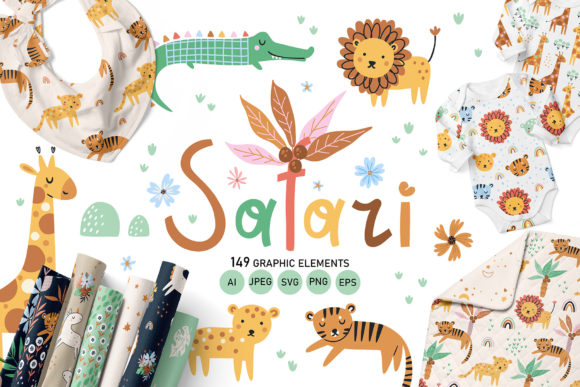
The defining characteristic of this collection is its adherence to a clean, modern aesthetic. Unlike overly saturated or cartoonish clipart, these Safari Kids Illustrations utilize soft earth tones, gentle gradients, and simple, uncluttered outlines. This style is highly sought after in contemporary interior design and branding because it feels calming rather than chaotic. For a designer, this means the assets are immediately usable in high-end markets. Whether you are creating a logo for a boutique baby brand or designing a nursery wall, the visual language speaks of quality and thoughtful curation. The illustrations manage to be cute without being infantile, allowing them to grow with the child or appeal to a broader demographic of parents who prefer a more "grown-up" aesthetic for their home decor.
The collection boasts a substantial library of 149 individual graphic elements. This includes the standard savanna cast—majestic lions, giraffes, elephants, and zebras—but adds a layer of imagination with lost dinosaurs and intricate savanna flora. For the creative professional, this variety is crucial. It allows for the construction of complex scenes or the isolation of single elements for branding purposes. The inclusion of leaf ornaments and trees provides the necessary "white space" fillers that help balance a composition, ensuring your designs don't feel crowded.
Practical Application: From Digital Screens to Textile Prints
One of the most significant hurdles in design asset management is adaptability. An image that looks great on a screen often fails when printed on fabric due to resolution issues or color translation. The Safari Kids Illustrations bundle addresses this by providing files in AI, EPS, and PNG formats with transparent backgrounds. This vector-based approach ensures that the artwork remains crisp whether you are printing a massive poster or a small tag for a onesie.
For entrepreneurs and small business owners in the print-on-demand space, this versatility is a game-changer. You can easily apply these motifs to:
- Bed Linen and Textiles: The seamless patterns included in the bundle are particularly valuable here. With 40 distinct patterns available in multiple formats (including SVG and JPG), you can create duvet covers, pillowcases, or upholstery that tile perfectly without visible seams.
- Wall Art and Posters: The hand-drawn nature of the illustrations adds a tactile quality to printed art. It feels organic and artisanal, which is a strong selling point in a market saturated with generic digital art.
- Apparel and Baby Clothes: The scale of the illustrations can be adjusted to suit everything from a full-front graphic on a sweatshirt to a subtle, repeating pattern on baby socks.
Strategic Integration for Brand Identity
When building a brand identity, consistency is key. Using a cohesive set of assets like the Safari Kids Illustrations helps establish a recognizable visual signature. If you are a blogger or content creator focusing on parenting or lifestyle content, incorporating these illustrations into your social media graphics or website headers can unify your look. It creates a "world" that your audience recognizes instantly.
However, it is important to consider the context of usage. While these are excellent graphic elements, they function differently than a traditional typeface. In editorial design or web design, where heavy text is involved, these illustrations serve as accent points—headers, sidebars, or dividers—rather than the primary vehicle for information. A common mistake is to overuse ornate graphics in areas requiring high readability. Instead, pair the whimsical nature of the safari art with a clean sans serif font or a simple serif font. This contrast creates a strong visual hierarchy, allowing the illustrations to provide personality while the typography handles the legibility.
Evaluating Fit and Technical Readiness
Before integrating any design asset into a commercial project, a thorough evaluation is necessary. First, assess the color palette. The Scandinavian style often relies on muted, pastel, or "dusty" colors. Ensure these align with your existing brand guidelines or the specific mood of the project. While the files are editable, shifting a muted palette to neon brights can sometimes strip the illustrations of their intended charm.
Second, consider the "density" of the patterns. The 40 seamless patterns provided are designed for versatility, but in packaging design or web backgrounds, a busy pattern can sometimes distract from the foreground content. It is often best to use these patterns on large, flat surfaces (like the background of a poster or a tote bag) where they can breathe, rather than behind small, intricate text blocks.
Finally, regarding licensing and usage: as a creative professional, always verify the specific rights associated with the bundle for your intended output. However, the structure of this collection—specifically the provision of editable vector files—suggests it is built for professional production workflows. It allows for easy color manipulation to match specific pantone requirements for printing, ensuring that the final product looks exactly as intended in the digital proof.
In conclusion, the Safari Kids Illustrations collection offers a robust toolkit for anyone operating in the children's market. It bridges the gap between artistic illustration and functional design assets. By leveraging the clean lines and versatile formats, you can create products and branding materials that feel both professional and enchanting, capturing the imagination of both children and the parents who purchase for them.